
Reverse Sear Beef Tenderloin
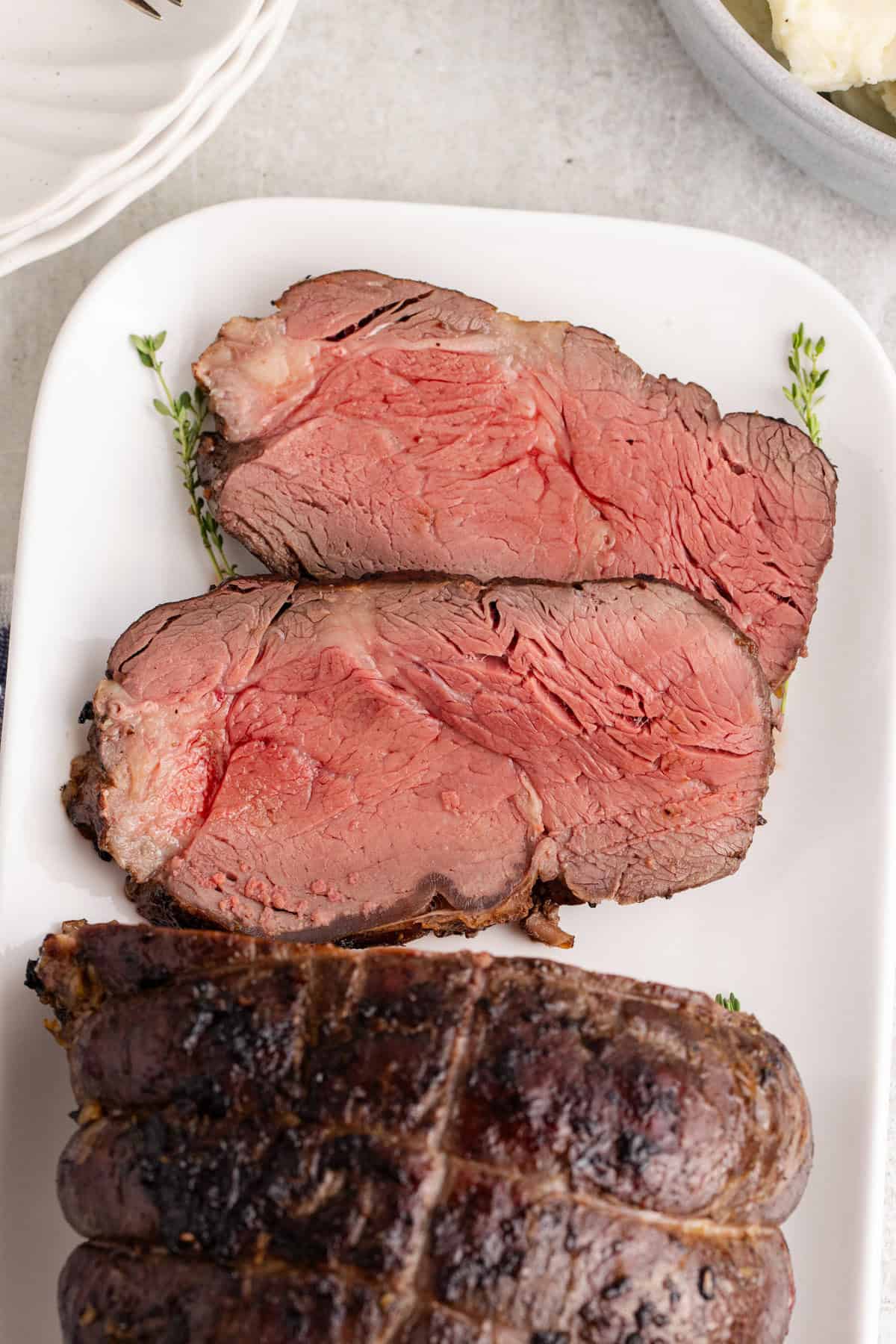
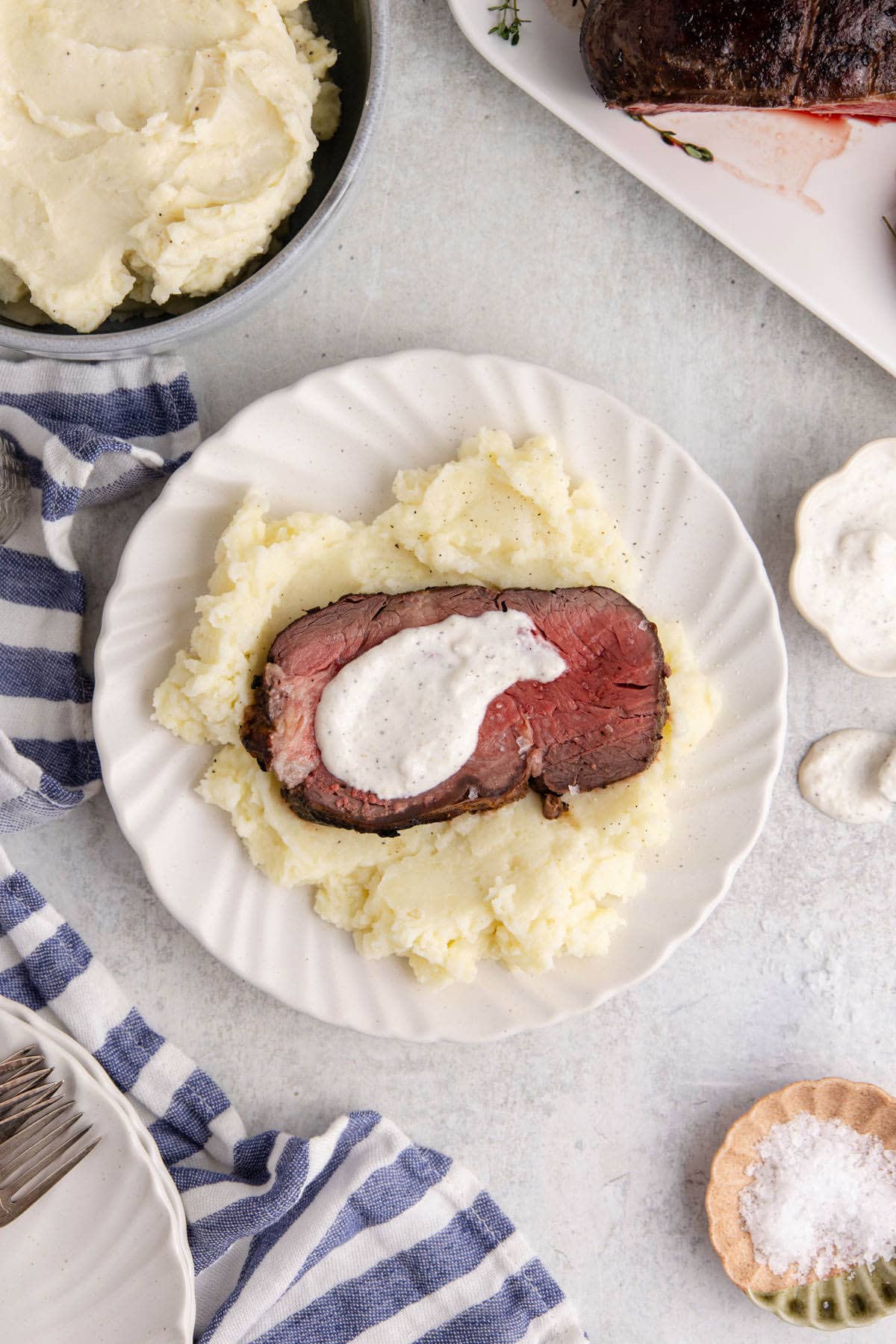
This Reverse Sear Beef Tenderloin Recipe delivers the most tender cut of beef, cooked low and slow for perfect doneness, then finished in a hot skillet with garlic butter, fresh herbs and onions for a golden crust and rich flavor.
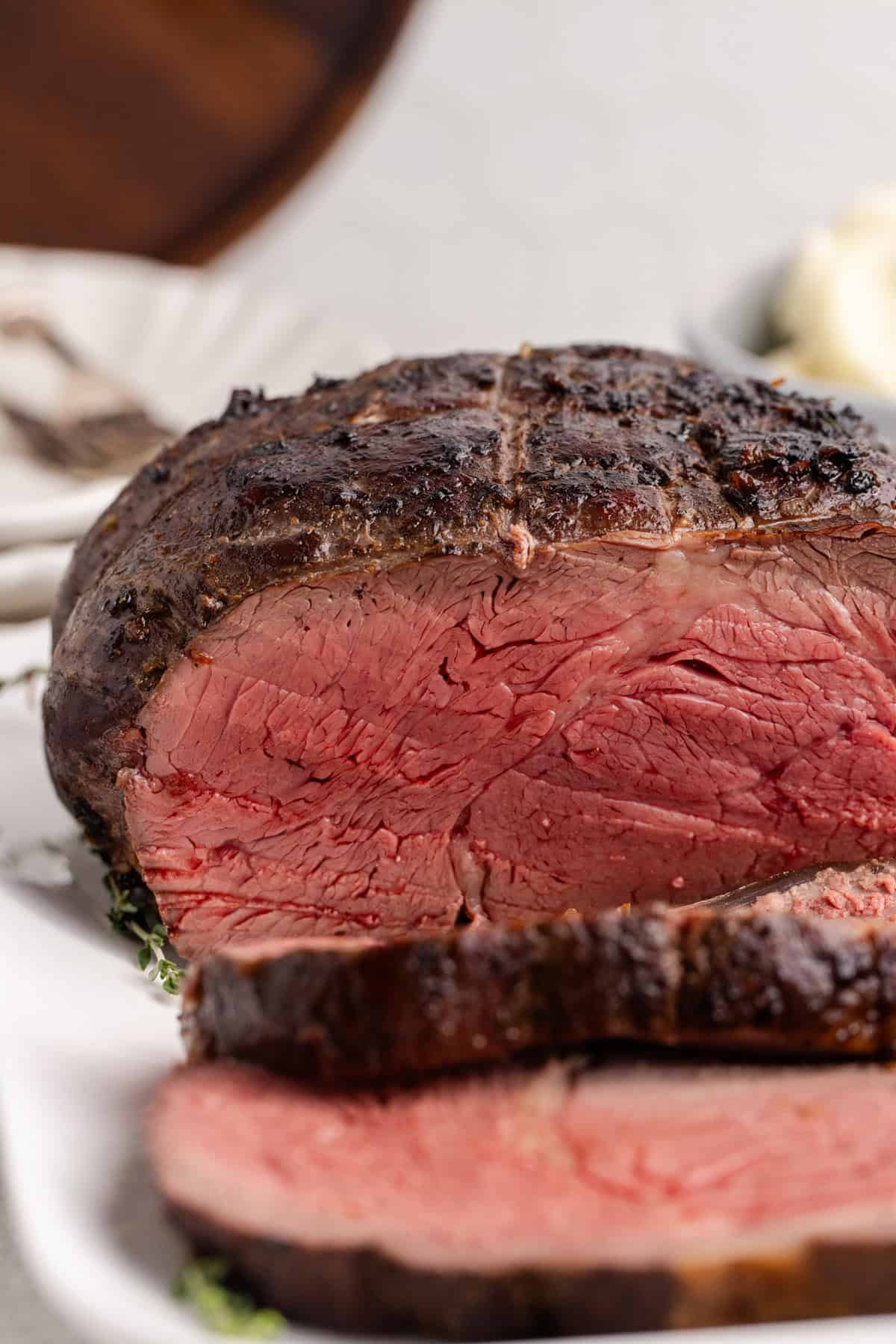
It's the best way to prepare beef tenderloin for special occasions, holiday meals or even Christmas dinner. With the foolproof reverse sear method, home cooks can achieve steakhouse-quality results every single time.
This beef tenderloin pairs well with our Creamy Mashed Potatoes and Green Beans with Shallots.
Jump to:
Why You Will Love This Recipe
- Perfect Doneness: The reverse sear method ensures even cooking.
- Golden Crust: A quick sear in garlic butter creates a flavorful outer layer without overcooking.
- Tender Cut: Beef tenderloin is naturally the most tender cut of beef.
- Holiday Ready: This recipe shines for Christmas dinner, holiday season gatherings or any special occasion.
Ingredients
This recipe uses simple ingredients to highlight the natural flavor of the beef.
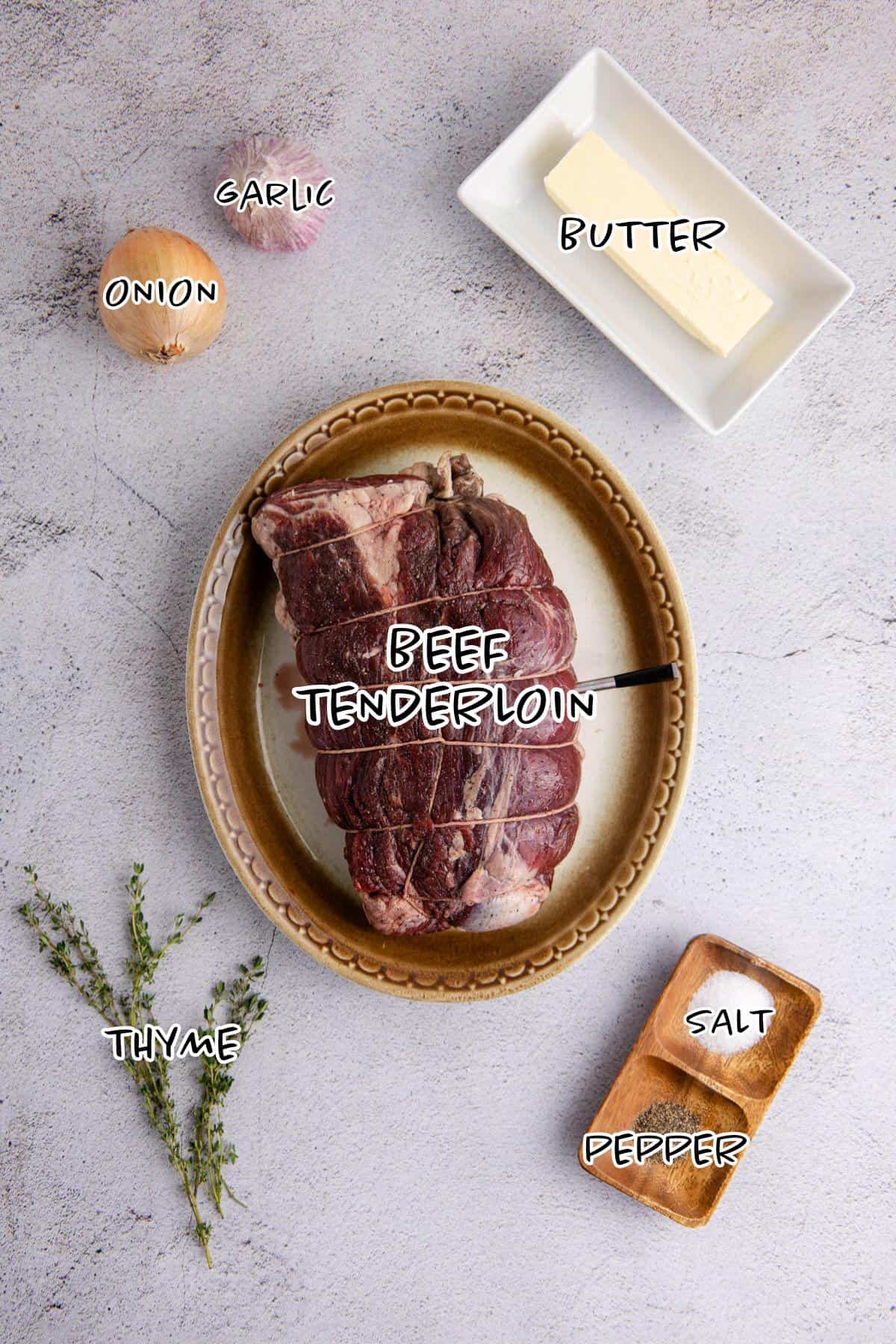
See the recipe card below for the exact quantities of each ingredient.
- Beef Tenderloin: A center-cut piece of meat that's lean, tender and perfect for reverse searing.
- Unsalted Butter: Creates a garlic butter base for basting and searing.
A baking sheet, butcher's twine, plastic wrap, a skillet, measuring spoons and an instant-read thermometer is all you need to make this recipe.
Variations
- Fresh Rosemary: Swap thyme or add both herbs for a more aromatic crust.
- Olive Oil Sear: Use olive oil with a high smoke point if you prefer less butter.
- Prime Rib Approach: Apply the same reverse sear method to a prime rib roast.
- Add Red Wine: Deglaze the skillet with red wine after searing for a quick pan sauce.
- Spice Blend: Rub the roast with cracked pepper, garlic powder or smoked paprika for extra flavor.
How to Make Reverse Sear Beef Tenderloin
This reverse sear beef tenderloin comes together with simple steps and a little patience.
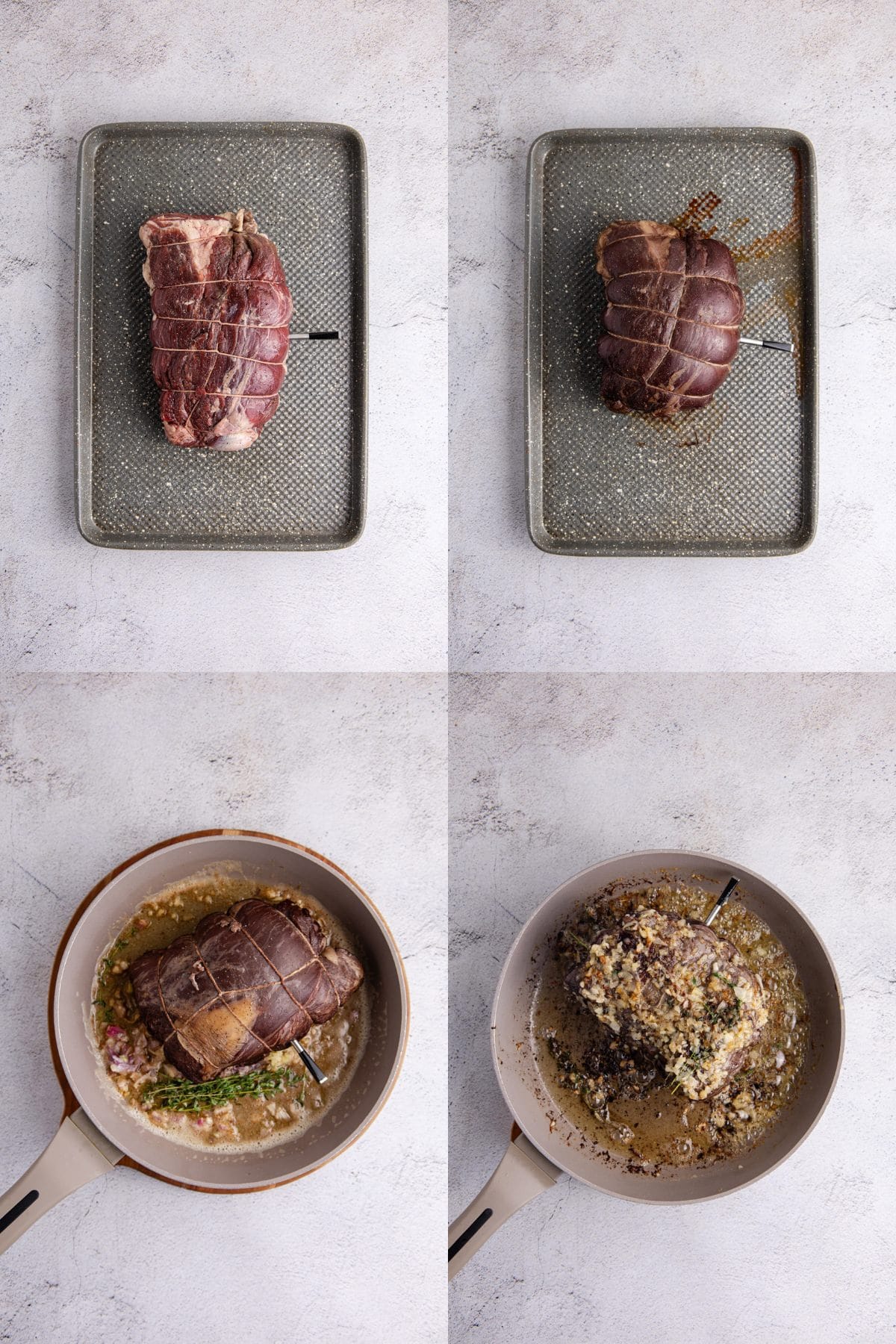
The day before cooking, prepare the tenderloin with butcher's twine. Tie butcher's knots at about 1 to 1 ½-in intervals and place on a platter or baking sheet, rub with ½ tablespoon salt, then wrap and place in the fridge overnight (at least 12 hours, no more than 48).
With the oven rack in the center, preheat to 225F. Remove the plastic from the roast and bake until 120F for rare or 125F for medium-rare on an instant read thermometer (about 2 hours or so). Allow the meat to rest and slightly rise in temp for about 5-10 minutes.
Remove from the oven and add butter to a skillet and melt until it starts to lightly brown over medium-high heat.
Toss in onion, thyme, garlic and black pepper, then add roast and sear all sides until nice and browned and spooning butter mixture on top.
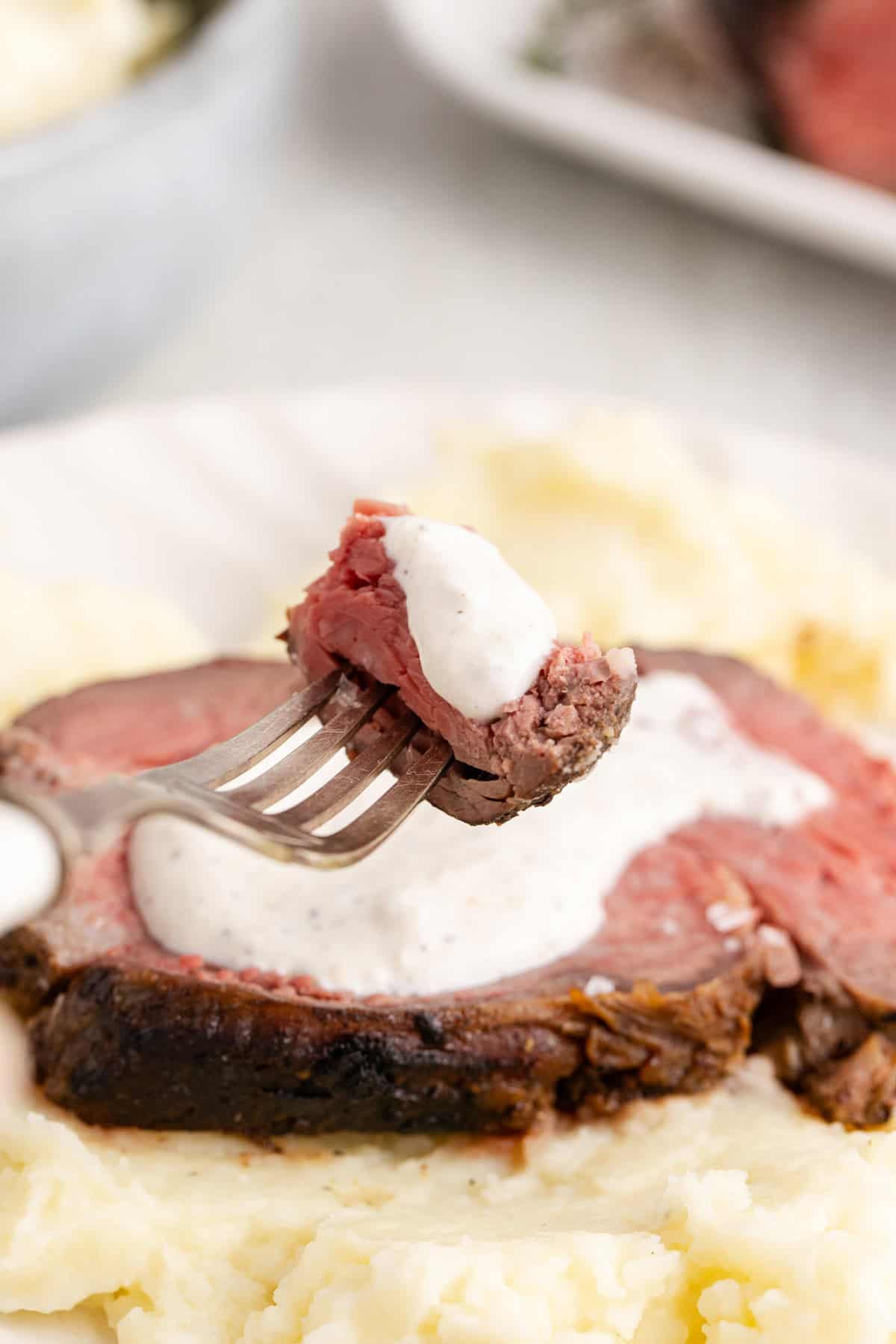
Keep cooking until 125F for rare or 130F for medium-rare.
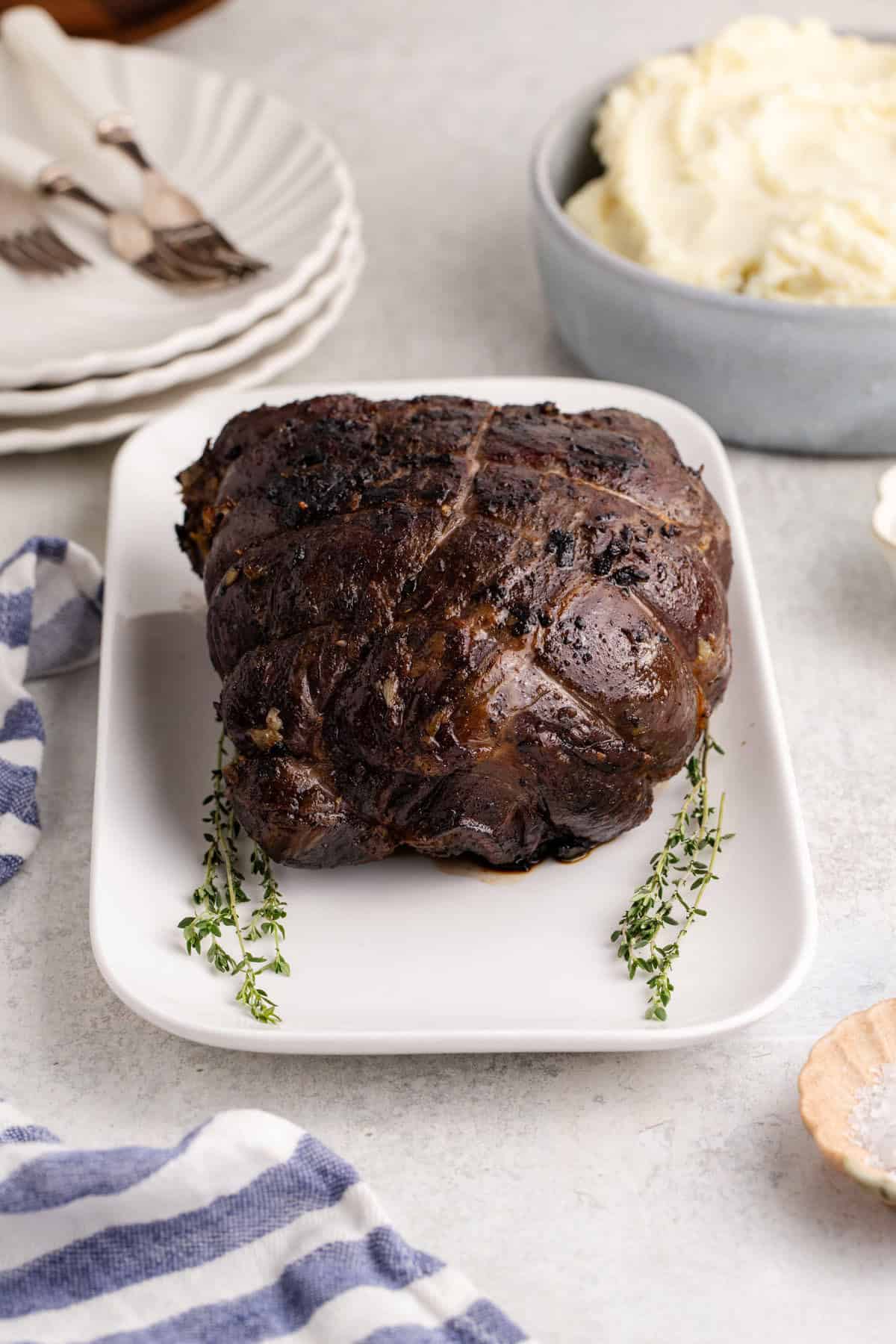
Transfer to a cutting board or platter to rest, then slice and serve.
Hint: Tying with kitchen twine keeps the roast uniform for even cooking.
Recipe Tips
- Use a Digital Thermometer: For best results, monitor internal temperature closely to avoid overcooked meat.
- Rest Before Searing: Letting the meat rest helps retain juices before finishing in the hot skillet.
- Sear Quickly: A cast-iron skillet on medium-high heat creates the best crust without overcooking.
- Slice after Resting: Always rest again after searing for 10-15 minutes before slicing for juicy, pink meat.
We like to top our beef tenderloin with a Creamy Horseradish Sauce.
More Main Dish Recipes You Will Love

Storage Instructions
- Refrigerator: Store leftover tenderloin in an airtight container for 3-4 days.
- Freezer: Wrap tightly in plastic and foil, then store in a freezer-safe bag for up to 2 months. Thaw overnight in the fridge before reheating.
- Reheating: Warm slices gently in a 300F oven, covered with foil, until heated.
Serving Suggestions
- Holiday Sides: Pair with our Old Fashioned Turkey Dressing, Maple Bacon Brussel Sprouts or roasted potatoes.
- Appetizer Spread: Start the meal with Jalapeño Cream Cheese Dip or Bacon Wrapped Sausages.
Reverse Sear Beef Tenderloin Recipe FAQs
It's a cooking method where the beef is cooked low and slow in the oven, then seared in a hot pan for a crisp crust and perfect medium-rare center.
Cook to 120F for rare, 125F for medium-rare or 130F for a slightly more cooked but still pink interior.
You can, but tying with butcher's twine ensures even cooking and better presentation.
A cast-iron skillet or heavy skillet gives the best crust thanks to its ability to hold high heat.
More Recipes You Will Love
Here are some more recipes you'll want to try!




Ready to get cooking? Save time by having a grocery list automatically generate for you by clicking the "Add to Shopping List" below.

Reverse Sear Beef Tenderloin
Equipment
- Baking Sheet
- Plastic Wrap
- Skillet
- Measuring Spoons
Ingredients
- 2 lb center-cut beef tenderloin
- ½ tablespoon sea salt
- 5 tablespoon unsalted butter
- 1 small yellow onion minced
- 8 sprigs fresh thyme
- 4 cloves garlic minced
- ½ teaspoon ground black pepper
Instructions
- The day before, prepare the tenderloin with butcher's twine. Tie butcher's knots at about 1 to 1 ½-in intervals and place on a platter or baking sheet, rub with ½ tablespoon salt, then wrap and place in the fridge overnight (at least 12 hours, no more than 48).
- With the oven rack in the center, preheat to 225F. Remove the plastic from the roast and bake until 120F for rare or 125F for medium-rare on an instant read thermometer (about 2 hours or so). Allow the meat to rest and slightly rise in temp for about 5-10 minutes.
- Remove from the oven and add butter to a skillet and melt until it starts to lightly brown over medium-high heat.
- Toss in shallot/onion, thyme, garlic and black pepper, then add roast and sear all sides until nice and browned and spooning butter mixture on top.
- Keep cooking until 125F for rare or 130F for medium-rare.
- Transfer to a cutting board or platter to rest, then slice and serve.
Notes
- Tying with kitchen twine keeps the roast uniform for even cooking.
- For best results, monitor internal temperature closely to avoid overcooked meat.
- Letting the meat rest helps retain juices before finishing in the hot skillet.
- A cast-iron skillet on medium-high heat creates the best crust without overcooking.
- Always rest again after searing for 10-15 minutes before slicing for juicy, pink meat.
Nutrition
If you made this recipe, let us know in the comments! Did you follow it as written or add your own twist?



We love making this recipe, it is so tender and the exterior is perfectly crisp!